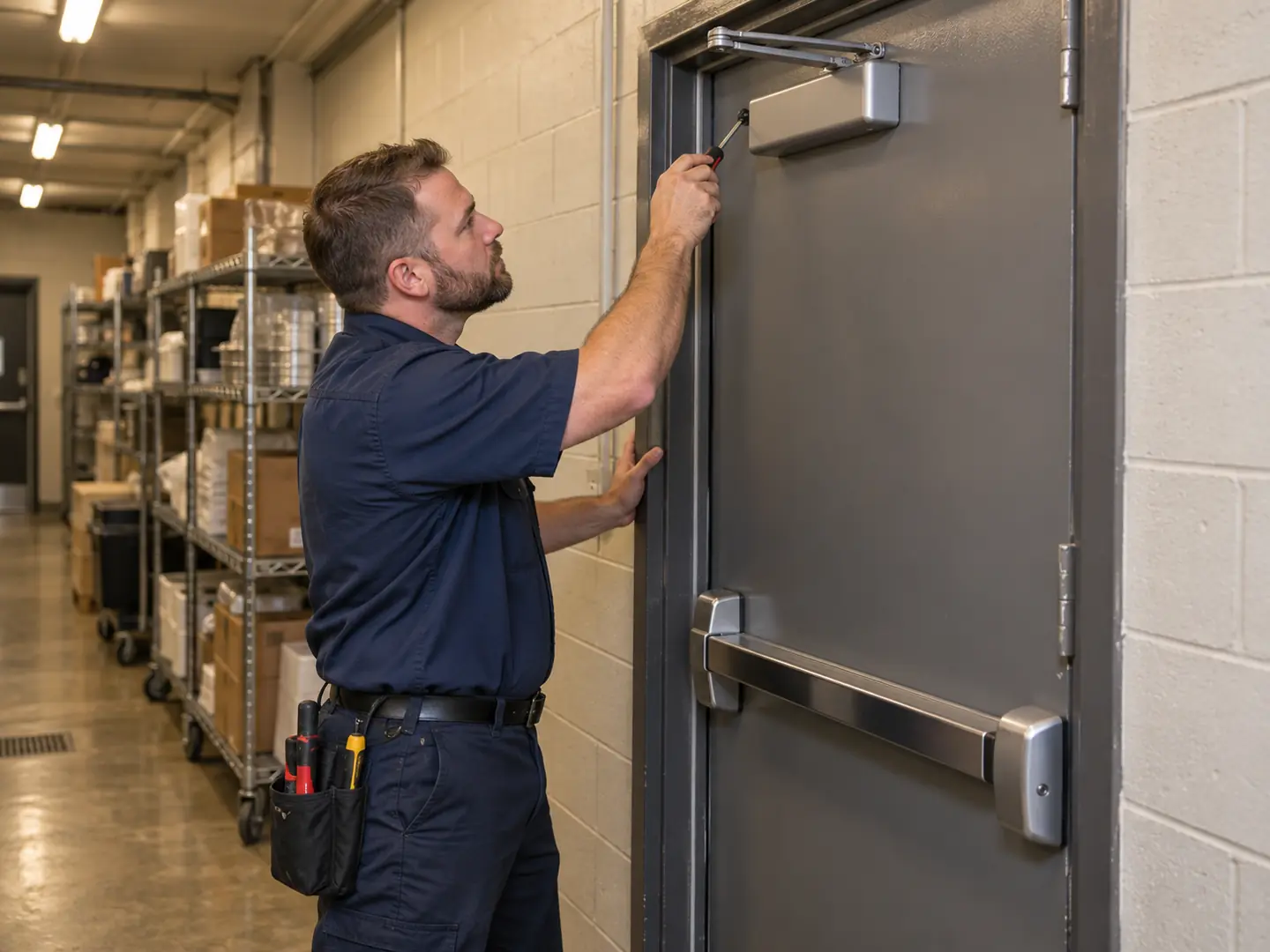
Commercial hardware works as a system
A storefront or service door may include the lock, latch, strike, hinges, closer, threshold, exit device, and frame. Replacing one part without checking the rest can leave the same symptom in place.
Tell us whether the door closes by itself, latches only when pushed, drags at the floor, or opens from one side but not the other. Those details help prepare the right conversation and equipment.
Rekeys and key plans after staff changes
A lost employee key does not always require replacing every lock. Suitable cylinders may be rekeyed so the old key stops working. For several doors, it also helps to decide who should open what before pinning begins.
A useful master-key plan is based on roles, not job titles copied into a chart. The opening manager, stockroom staff, maintenance contact, and property owner may need different access. Keep the plan simple enough to manage after the next change.
- Choose one person who can authorize decisions during the visit.
- Label doors by location, not by the name of the employee who currently uses them.
- Keep an updated record of issued keys and returned keys.
Before you call
Bring the details that change the answer.
- Business name, exact entrance, suite, and access instructions
- Owner, manager, landlord, or other authorized contact
- What the door prevents staff or customers from doing
- Photos of the door, edge, frame, closer, latch, and exit hardware
- Number of users, doors, and key levels if access is changing
Fort Worth properties do not all receive vendors the same way
A Near Southside restaurant may use a rear service entrance. A downtown office may require loading access or security check-in. A warehouse near I-35W may need a gate contact before the technician reaches the door.
Share those instructions when the call is placed. The address gets us to the property. The entrance detail gets us to the actual work.
From more than 20 years in the work
The opening belongs to an operation
A front door can affect customers. A rear door can affect deliveries. An interior office can hold records, equipment, or cash controls. Tell us what the opening does during a normal day, because the answer may shape timing, authorization, key distribution, and the way the completed work is tested.
Some commercial systems extend beyond ordinary locksmith scope or require coordination with the building, fire-safety provider, alarm company, or access-control vendor. LockReach confirms the specific hardware before presenting a simple lock change as the answer.
One more useful thought
Leave the next shift a clear handoff
Commercial work affects more than the person standing at the door. Note which keys changed, which entrance was serviced, who received the new access, and whether property management needs a record. A short handoff prevents the next employee from discovering a change without context.
After the work, test the opening through a normal cycle. Unlock it, open it, let it close, confirm the latch, and lock it again. The hardware should be checked as the staff will actually use it, not only while the door is held open.