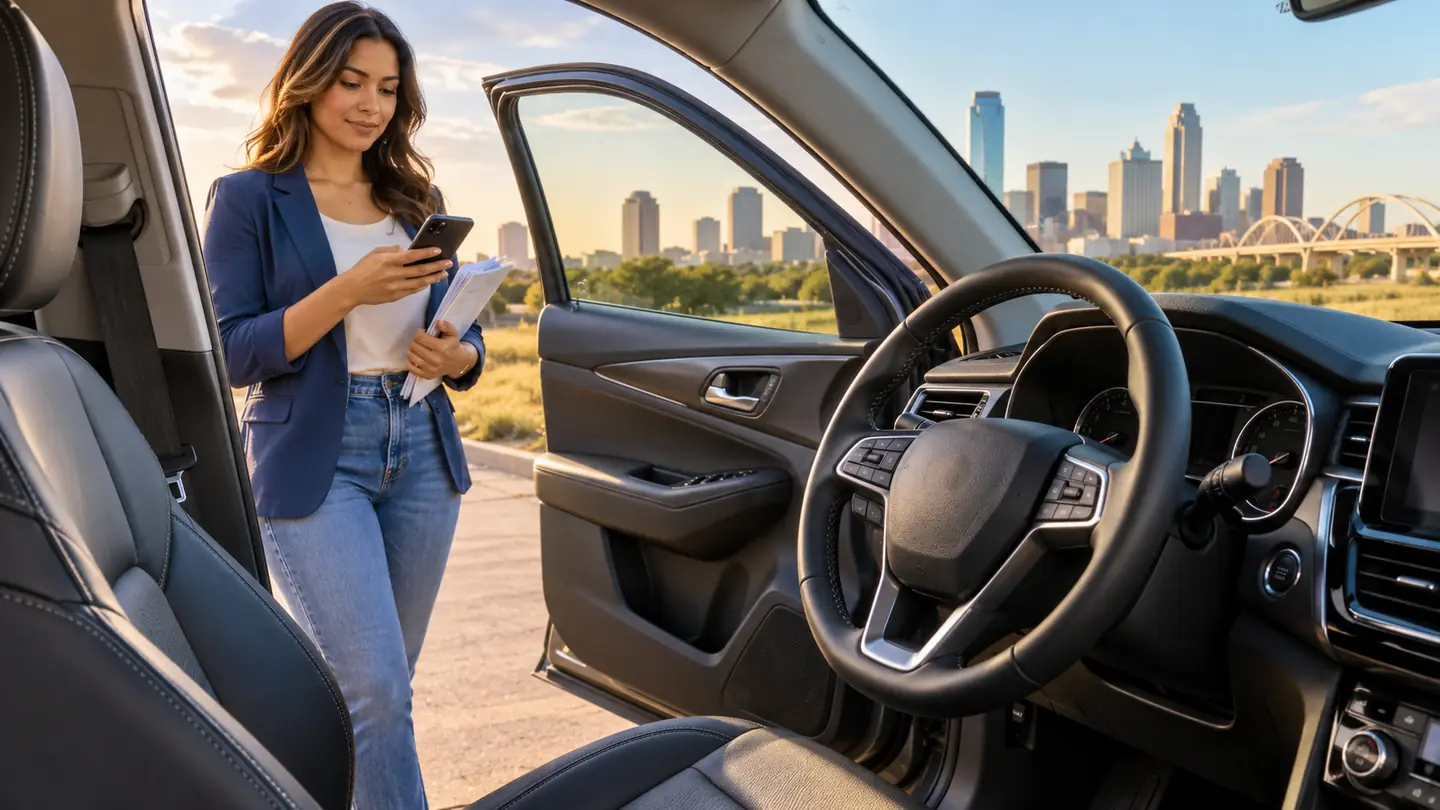
Start with access, then separate the key problem
A vehicle lockout does not always mean the key needs replacement. The key may be on the seat, in the trunk, or simply inaccessible. Once entry is restored, the original key may be all that is needed.
A lost, broken, worn, or unrecognized key is a different path. We identify the vehicle system and discuss what can be handled at the vehicle. Certain years, trims, imported models, or proprietary systems may require additional confirmation before dispatch.
Parking garages need better directions than street addresses
A downtown address can contain several garage entrances and many levels. Share the garage name, entrance street, level, row, nearest elevator, and vehicle color. If clearance, payment, or security check-in applies, mention it before the technician arrives.
For roadside calls around I-30, I-35W, Loop 820, or US-287, safety comes first. Move away from traffic when possible and give a safe meeting point rather than standing next to a live lane.
- Do not repeatedly twist a key that feels close to breaking.
- A photo of the fob can help identify style, but year, make, model, and VIN matter more.
- Keep proof of ownership accessible if it is not inside the locked vehicle.
Before you call
Bring the details that change the answer.
- Vehicle year, make, model, and VIN when available
- Whether any working key or fob remains
- Which functions still work: door, trunk, remote buttons, or engine start
- Registration, title, or another way to confirm ownership
- Exact parking location and any garage access instructions
Twenty years around vehicle calls teaches one useful habit
Do not buy a random online fob before confirming the exact part and compatibility. A case can look identical while the internal frequency, chip, or part number is different. The inexpensive purchase becomes expensive when it cannot communicate with the car.
Tell LockReach what you already have, including any aftermarket remote, worn spare, broken blade, or recently changed battery. The odd detail is often the detail that saves time.
From more than 20 years in the work
A vehicle symptom can split into two jobs
Suppose the door opens with the mechanical blade, the remote buttons do nothing, and the engine still starts. That points to a different path than a vehicle that says no key detected. The more precisely you separate door access, remote functions, and engine start, the easier it is to identify what equipment and parts may be needed.
Ownership verification is part of every responsible auto locksmith call. If the registration is locked inside, say so. A title record, insurance information, digital registration, or another acceptable document may help, but the exact verification path must be confirmed for the situation.
One more useful thought
Before the technician leaves the vehicle
The useful finish is a complete check of the functions included in the work. That may mean opening and locking the doors, testing the mechanical blade, trying remote buttons, and confirming engine start when the service involves a programmed key. Bring every remaining key so the test reflects the actual set you plan to use.
If one function still behaves differently, say it while the vehicle and equipment are together. A quiet parking-space test is much easier than discovering the same symptom after the car has moved across Fort Worth.